Author: Shiju Thomas

  • The Marketing Pilot: Your Strategic Bridge From Skepticism to Scale

    The Marketing Pilot: Your Strategic Bridge From Skepticism to Scale

    There’s a particular tension that exists in the building materials industry right now. On one side, the relentless drumbeat of “digital transformation” and “ecommerce imperative.” On the other, the hard-won wisdom of decades spent building businesses on relationships, handshakes, and knowing your customers by name.

    This tension isn’t weakness. It’s wisdom colliding with change.

    And the solution isn’t choosing one over the other. It’s the pilot program—a structured approach that lets you test digital waters without abandoning the ship you’ve spent years building.

    The Fundamental Problem With “Big Bang” Marketing

    Most building supply companies approach digital marketing the same way they approach construction projects: they want the complete blueprint upfront. Total costs. Exact timeline. Guaranteed outcomes. It’s a reasonable expectation when you’re pouring a foundation.

    It’s a disastrous approach when you’re transforming how you reach customers.

    I’ve watched companies invest $50,000 into a full-scale ecommerce platform before they understood whether their customers would actually use it. I’ve seen businesses commit to year-long agency contracts without knowing which channels would deliver results. The graveyard of failed digital initiatives is filled with companies that confused certainty with strategy.

    The irony? The very businesses that built their success on “measure twice, cut once” abandon that principle the moment they enter digital marketing.

    A pilot program reverses this dynamic. It’s the marketing equivalent of a site survey before breaking ground. You’re not committing to the entire building—you’re testing the soil, checking the load-bearing capacity, and ensuring your foundation will hold before you pour concrete.

    What Makes a Marketing Pilot Actually Work

    A pilot isn’t just “trying something small.” That’s experimenting without structure, and it leads to inconclusive results that neither prove nor disprove anything meaningful.

    A true marketing pilot is a hypothesis-driven experiment with defined parameters, measurable outcomes, and the explicit goal of either scaling or stopping based on evidence.

    Here’s what separates signal from noise:

    1. Start With One Clear Objective

    The most common failure point in marketing pilots isn’t execution—it’s ambiguity of purpose. Companies launch pilots while simultaneously trying to prove ROI, test multiple channels, validate messaging, and train their team. That’s not a pilot. That’s chaos with a budget.

    Your pilot should answer one strategic question: Does [specific tactic] generate [specific outcome] for [specific audience] at an acceptable cost?

    For a building supply company, that might be: “Will a Google Ads campaign targeting commercial contractors within 25 miles generate qualified quote requests at less than $75 per lead?”

    Notice what that question does. It names the channel (Google Ads), the audience (commercial contractors, defined geographically), the desired action (quote requests), and the acceptable cost threshold. Everything else is secondary.

    This clarity isn’t restrictive—it’s liberating. When you know exactly what you’re testing, you can make decisions quickly. When results come in, you know immediately whether you’re succeeding or failing. There’s no ambiguity requiring committee meetings to interpret.

    2. Choose Your Battlefield Carefully

    Not all products, services, or customer segments are equally suited for pilot programs. You want to test in an environment where success is achievable, measurable, and meaningful.

    The best pilots target high-intent audiences with established demand. In practical terms for building supply companies, this means focusing on:

    Your best existing customers. These are people who already trust you, understand your value, and buy regularly. If your digital channel can’t convert them, it won’t convert strangers. Start by making it easier for loyal customers to reorder, access account information, or request quotes online. If they adopt it enthusiastically, you’ve validated the concept. If they don’t, you’ve learned something crucial before investing in acquisition.

    High-value product categories. Don’t test your entire 10,000 SKU catalog. Pick a category that represents significant revenue, has clear specifications, and doesn’t require extensive consultation. Decking materials, for example, or commercial door hardware. Products where customers know what they need and pricing is relatively standardized create better pilot conditions than custom fabrication or highly technical specifications requiring engineer approval.

    Geographic concentration. If you have multiple locations, pilot in one market first. Choose a location with engaged management, reliable data systems, and a customer base representative of your broader market. You want enough volume to generate meaningful results, but contained enough to manage closely.

    Testing in your strongest arena first isn’t playing it safe—it’s being strategic. You’re establishing a baseline of what’s possible under favorable conditions. Once you prove it works there, you can tackle harder challenges.

    3. Define Success Before You Start

    I’ve seen countless pilots that “sort of worked” but led nowhere because nobody agreed upfront on what success looked like. The sales team wanted 100 new customers. The CEO wanted profitable growth. The marketing director wanted engagement metrics. Everyone measured different things, and the pilot died in interpretation purgatory.

    Before you launch anything, establish specific key performance indicators that directly connect to business outcomes. For building supply companies, this typically includes:

    Cost Per Acquisition (CPA): What does it cost to acquire a new customer through this channel? For most building supply businesses, $200-$500 is reasonable depending on customer lifetime value. If your average commercial customer spends $15,000 annually and stays for five years, a $500 acquisition cost is magnificent. If your average customer spends $500 once, it’s unsustainable.

    Quote-to-Order Conversion Rate: How many quote requests actually turn into purchases? This reveals whether you’re attracting the right audience. If you’re generating 100 quote requests monthly but only converting 2%, you’re attracting tire-kickers, not buyers. A 15-20% conversion rate suggests real demand.

    Average Order Value: Are your digital customers ordering the same volumes as your traditional customers? If your average in-person order is $1,200 but your average online order is $87, you’re not replacing or augmenting existing channels—you’re creating a new low-value segment that may not justify the investment.

    Customer Lifetime Value: The ultimate measure. Is the customer who finds you through this marketing channel as valuable over time as the customer who found you through traditional means? This takes longer to measure but matters more than everything else.

    Set these targets before the pilot begins. Put them in writing. Get leadership agreement. This isn’t bureaucracy—it’s clarity. When the pilot concludes, you’ll have binary decisions to make. Did we hit the targets? Yes or no. Scale or stop.

    4. Timeline: Long Enough to Learn, Short Enough to Decide

    Most marketing pilots fall into two extremes: they’re either too short to generate meaningful data, or they drag on so long that the market changes and you’re no longer testing the same hypothesis.

    The right timeline for building supply marketing pilots is typically 90 days—long enough to move beyond initial novelty and establish patterns, short enough to maintain urgency and focus.

    Here’s why three months works:

    Month 1: Setup and Launch You’re building campaigns, testing messaging, working through technical integration issues, and generating your first results. The data here is largely directional. You’re learning what breaks, what confuses customers, and what obvious improvements need to happen. Expect performance to be below target. That’s normal.

    Month 2: Optimization You’ve fixed the obvious problems. Traffic is flowing. You’re A/B testing landing pages, refining ad targeting, adjusting bid strategies, and improving conversion paths. Performance should be improving week over week. If it’s not, something is fundamentally wrong with your hypothesis.

    Month 3: Validation The campaign is mature. Performance has stabilized. You’re seeing consistent patterns in customer behavior, conversion rates, and costs. This is real data showing what happens when the system runs smoothly. This is what you extrapolate to make scaling decisions.

    At the end of 90 days, you should have enough information to make a confident decision: scale, stop, or modify and test again.

    5. Budget: Enough to Matter, Not Enough to Hurt

    The most common question I get about pilots is: “How much should we spend?”

    The answer isn’t a number—it’s a principle: You need enough budget to generate statistically significant results, but not so much that failure creates organizational trauma.

    For most building supply companies, a meaningful marketing pilot requires $5,000-$15,000 in media spend over 90 days. That’s enough to test Google Ads in a focused geographic area, run targeted LinkedIn campaigns to commercial contractors, or experiment with strategic content promotion.

    Here’s the math: If you’re targeting a cost per lead of $75, a $10,000 budget should generate approximately 133 leads. If your quote-to-order conversion rate is 15%, that’s 20 new customers. If your average first order is $2,000, you’ve generated $40,000 in revenue from a $10,000 investment. That’s a 4:1 return, which easily justifies scaling.

    But here’s the more important part: If it doesn’t work, you’ve spent $10,000 to learn something invaluable—that this approach, in this market, with this audience, doesn’t work. That knowledge prevents you from wasting $100,000 on a full-scale rollout.

    That’s not an expense. That’s insurance.

    The Scaling Decision: When Good Enough Becomes Great

    Let’s assume your pilot worked. You hit your targets. Cost per acquisition is acceptable, conversion rates are solid, and customers acquired through the channel are buying at similar values to your traditional customers.

    Now comes the harder question: How do you scale without destroying what made the pilot successful?

    This is where most companies stumble. They assume that a successful pilot at $10,000 will simply multiply at $100,000. It won’t. Scaling introduces complexity, competition, and constraints that didn’t exist in the pilot.

    The Three Phases of Sustainable Scaling

    Phase 1: Controlled Expansion (Months 4-6)

    Don’t immediately 10x your budget. Instead, double it. If you spent $10,000 monthly in the pilot, go to $20,000. This tests whether your results hold at moderate scale without exposing you to catastrophic failure if something breaks.

    Watch these leading indicators carefully:

    • Is cost per acquisition increasing as you expand reach?
    • Are conversion rates declining as you move beyond your core audience?
    • Is average order value holding steady or dropping?
    • Are customer acquisition costs still justified by customer lifetime value?

    If performance remains stable as you double spend, you’ve proven the pilot wasn’t a fluke. You’ve found something repeatable.

    Phase 2: Multi-Channel Testing (Months 7-12)

    Once one channel is performing consistently, it’s time to test complementary channels. If Google Ads worked for commercial contractors, what about LinkedIn for architects? If email marketing resonated with existing customers, what about a remarketing campaign for website visitors who didn’t convert?

    The key is sequencing. Don’t launch three new channels simultaneously. Launch one, optimize it, then add another. This way, you know which channel drove which results. You’re building a portfolio of proven tactics, not a chaotic mix of unproven experiments.

    Phase 3: Systematic Optimization (Month 12+)

    By the end of your first year, you should have 2-3 channels performing reliably, a clear understanding of customer acquisition costs, and enough data to optimize based on customer segment, product category, and seasonal patterns.

    This is where marketing transforms from cost center to growth engine. You’re no longer guessing. You’re making data-informed decisions about budget allocation, audience targeting, and channel mix. You know that every dollar you invest returns a predictable multiple.

    The Common Failure Patterns (And How to Avoid Them)

    Even well-designed pilots fail. Not because the concept is flawed, but because of predictable execution mistakes.

    Failure Pattern #1: Testing Too Many Variables

    A building supply company decides to test Google Ads, Facebook, LinkedIn, and email marketing simultaneously, each with different messaging, different offers, and different landing pages. When results are mediocre across all channels, they conclude “digital marketing doesn’t work for us.”

    The truth? They have no idea what works because they tested everything at once. They can’t isolate which variable drove which outcome.

    The fix: Test one channel at a time. Once you’ve proven it works, add another.

    Failure Pattern #2: Changing Strategy Mid-Flight

    Week 3 of the pilot, results are below expectations. The CEO reads an article about TikTok marketing and wants to pivot immediately. The pilot is abandoned before it generates meaningful data.

    The fix: Commit to the timeline. Make minor tactical adjustments (ad copy, targeting refinements), but don’t change the fundamental strategy unless something is catastrophically broken. Most pilots don’t hit their stride until month 2.

    Failure Pattern #3: No Integration With Sales Process

    Marketing generates 50 quality leads. Sales doesn’t have a process for following up on digital inquiries. Leads go cold. Marketing gets blamed for “bad leads.”

    The fix: Before launching the pilot, ensure your sales team understands how leads will be delivered, what follow-up timeline is expected, and how success will be measured. Marketing and sales must be aligned, or the pilot will fail regardless of lead quality.

    Failure Pattern #4: Ignoring Customer Feedback

    You launch a quote request form that requires 15 fields of information. Customers abandon it. Instead of simplifying the form, you conclude “customers don’t want to request quotes online.”

    The fix: Build feedback loops into your pilot. Survey customers who abandon the process. Ask successful customers what would have made it easier. Treat every failure as a data point revealing how to improve.

    What Success Actually Looks Like

    Here’s what I want you to understand: A successful pilot doesn’t mean instant profitability or immediate scale. It means validated learning that gives you confidence to invest more.

    You’ve succeeded if you can answer these questions definitively:

    • Does this channel reach our target audience?
    • Do the customers we acquire behave like our best existing customers?
    • Is the cost of acquisition sustainable given customer lifetime value?
    • Can we handle the volume if we scale this 10x?
    • Do we have the systems, processes, and people to support growth?

    If the answer to all five is yes, you’re not running a pilot anymore. You’re building a growth engine.

    And here’s the beautiful part: Once you’ve proven the model works in one market, with one product category, through one channel, you can replicate it. You can test the same playbook in a different location. You can apply the same methodology to a different product line. You can add complementary channels that follow the same framework.

    That’s not luck. That’s strategy.

    The Real ROI of Pilots: Knowledge

    Let me share what might be the most important insight about marketing pilots: The value isn’t just in the leads you generate or the customers you acquire. It’s in what you learn about your market, your customers, and your business model.

    A pilot that “fails” to hit revenue targets but reveals that your core audience is shifting from baby boomer contractors to millennial project managers is extraordinarily valuable. It tells you where to invest in the next three years.

    A pilot that discovers your customers desperately need better product specification sheets delivered faster is worth more than a hundred new leads—it reveals a competitive advantage you can build.

    A pilot that proves your team can execute digital initiatives without outside help creates organizational capability that compounds over years.

    The companies that win aren’t the ones with the biggest marketing budgets. They’re the ones that learn faster, adapt quicker, and scale what works while stopping what doesn’t.

    Pilots give you permission to learn without betting the business.

    Start Where You Are

    If you’re reading this and thinking, “We should have done this years ago,” you’re right. But you can’t change the past. You can only act on what’s in front of you today.

    The building supply companies that thrive in the next decade won’t be the ones with the most locations or the largest inventories. They’ll be the ones that figured out how to meet customers where they’re going, not where they’ve been.

    Digital marketing isn’t about abandoning the relationships that built your business. It’s about extending those relationships into channels where your customers are already spending their time.

    And the pilot program is your strategic bridge from skepticism to scale.

    Start small. Test rigorously. Learn quickly. Scale what works.

    That’s not just good marketing advice.

    That’s how you build a business that lasts.

  • The Great Graduation Crisis: Why Most SaaS Startups Never Make It to Series A

    The Great Graduation Crisis: Why Most SaaS Startups Never Make It to Series A

    The venture landscape has undergone a profound transformation. What was once a predictable progression from seed to Series A has become a treacherous passage where four out of five startups perish. This isn’t merely a market correction—it’s a fundamental recalibration of what it means to build enduring value in the digital age.

    The Arithmetic of Ambition

    The numbers tell a stark story. In the halcyon days of 2020, nearly a quarter of U.S. seed-funded startups reached Series A within two years. By 2022, that figure had collapsed to a mere 5%. For SaaS startups specifically, the chasm has grown even wider: only 12% of those who raised seed in 2022 managed to secure Series A by mid-2024, compared to 37% from the 2020 cohort.

    This isn’t simply about market cycles. It represents a philosophical shift in how investors perceive value creation. The era of “growth at any cost” has yielded to an age where efficiency and sustainability reign supreme.

    Regional Realities: A Tale of Three Ecosystems

    United States: The Epicenter of Excellence American startups historically enjoyed the highest graduation rates, with 51-61% of pre-2021 seed companies eventually reaching Series A or beyond. Today’s founders face a dramatically different reality, where only one-third of seed companies progress further.

    India: The Crucible of Constraint The Indian ecosystem presents perhaps the greatest challenge, with conversion rates hovering around 20%—cited as “the lowest among all ecosystems.” This stark reality reflects both the intensity of competition and the scarcity of Series A capital willing to back emerging markets.

    Australia & New Zealand: The Boutique Battlefield ANZ mirrors global trends with conversion rates around 15-25%, constrained by a smaller pool of investors and the geographic isolation that requires exceptional companies to attract international capital.

    Time: The Ultimate Truth Teller

    The temporal dimension reveals another crucial truth: excellence cannot be rushed. The median time from seed to Series A has stretched from 20 months in 2021 to nearly 24 months today. Many companies now require 24-30 months to demonstrate the traction that investors demand.

    This extension isn’t merely about market conditions—it reflects a deeper understanding that sustainable businesses require time to mature. Bridge rounds and extended seed funding have become structural features rather than emergency measures, with nearly half of all Series A financings in 2023 being extensions rather than new rounds.

    The Economics of Expectation

    Round Sizes: Bigger Bets, Higher Bars

    U.S. Series A rounds have evolved from the $5-8 million norm of a decade ago to today’s $10-15 million standard. The 2021 peak saw median rounds of $12 million, dropping to $9-10 million in 2023 before rebounding in 2024 as AI-driven optimism returned.

    Indian startups reached a milestone in 2021 when average Series A deals first hit $10 million, maintaining around $11 million through 2022. ANZ rounds remain more modest, typically ranging from $5-8 million USD, reflecting the regional capital constraints.

    Valuations: The Price of Progress

    Pre-money valuations tell a story of boom, correction, and cautious recovery:

    • U.S.: From pre-pandemic medians of $25 million to 2022 peaks of $50+ million, settling around $38-44 million today
    • India: Rising from $15-25 million historically to $30-40 million for quality startups
    • ANZ: More conservative $15-30 million range, unless attracting international investors

    The New Imperatives: Four Pillars of Series A Success

    The elevated bar demands a fundamental shift in how founders approach growth:

    1. Runway Resilience

    Plan for 24-30 months of capital between seed and Series A. The days of 18-month sprints are over.

    2. Metric Mastery

    Investors now expect $1-2 million ARR, 80%+ gross margins, and burn multiples under 2x. Quality of growth trumps velocity.

    3. Geographic Agility

    Strong SaaS startups increasingly transcend regional boundaries. Indian companies leverage global revenue streams; ANZ startups court international investors.

    4. Efficiency Excellence

    The Rule of 40 isn’t just a benchmark—it’s becoming table stakes for serious consideration.

    The Philosophical Foundation

    At its core, this transformation reflects a return to fundamental principles. The market has rediscovered that sustainable value creation requires discipline, patience, and genuine customer value. The companies that survive this crucible won’t just be stronger—they’ll be fundamentally different beasts, built for endurance rather than mere velocity.

    The “Series A crunch” isn’t a temporary inconvenience—it’s a permanent elevation of standards. For founders willing to embrace this reality, it represents not an obstacle but an opportunity to build companies of lasting significance.

    The great graduation crisis, paradoxically, may prove to be venture capitalism’s greatest gift: a forced return to the timeless principles of building businesses that matter.


    Sources and References


    1. Crunchbase News: U.S. seed-stage outcomes and graduation rates: news.crunchbase.com
    2. LinkedIn Analysis: Series A conversion trends and timing: linkedin.com
    3. Carta Research: Fundraising timelines and valuation datacarta.com
    4. Allegory Capital: Early-stage market commentary: allegory.capital
    5. Bain & Company: India VC trends and deal sizes: bain.com
    6. ITIC IITH: Indian startup ecosystem analysis:itic.iith.ac.in
    7. ScaleUp Finance: SaaS-specific funding research:scaleup.finance
    8. Aurelia Ventures: Series A valuation benchmarks aureliaventures.com
    9. Morgan Stanley: India tech startup valuations: morganstanley.com
    20. Cutthrough Venture: Australian funding trends: cutthrough.com
  • Applying AI & ML to your B2B Saas Marketing

    Applying AI & ML to your B2B Saas Marketing

    In today’s rapidly evolving B2B SaaS landscape, Artificial Intelligence (AI) and Machine Learning (ML) technologies stand out as pivotal forces driving acquisition strategies to unprecedented levels of sophistication and effectiveness. The utilization of AI and ML is current reality, with these technologies already making significant impacts across various stages of the customer acquisition funnel. From automating lead generation processes to enabling hyper-personalized marketing campaigns, AI and ML are reshaping the way B2B SaaS companies engage with potential customers.

    Understanding Customer Behavior Through Data

    AI and ML shine in their ability to analyze vast amounts of data to understand customer behavior and preferences deeply. This capability allows for the identification of patterns that might not be apparent to human analysts, leading to more accurate predictions of future behaviors. For example, predictive analytics can forecast which leads are most likely to convert, enabling sales teams to prioritize their efforts more effectively.

    Optimizing Marketing Campaigns

    One of the most significant advantages of AI and ML in B2B SaaS acquisition is the optimization of marketing campaigns. These technologies can analyze the performance of various campaign elements in real-time, making adjustments to improve effectiveness. By testing different messages, channels, and content types, AI-driven platforms can quickly identify the most impactful strategies, reducing the cost of customer acquisition and increasing ROI.

    Personalizing the Customer Experience

    Personalization is a critical component of successful B2B SaaS marketing, and AI and ML technologies take this to the next level. By leveraging data on customer interactions, preferences, and behavior, AI can tailor the marketing content and sales pitches to each prospect. This level of personalization ensures that potential customers receive relevant information that addresses their specific needs and pain points, significantly increasing the likelihood of conversion.

    Lead Scoring and Qualification

    AI and ML also transform lead scoring and qualification processes by providing more nuanced and dynamic evaluations of potential customers. Instead of relying on static criteria, these technologies can continuously learn from new data, refining their predictions about which leads are most valuable. This ensures that sales teams focus their energy on the leads most likely to close, optimizing the sales process.

    Enhancing Customer Retention

    Beyond acquisition, AI and ML play vital roles in customer retention. By analyzing usage data and customer feedback, these technologies can identify early signs of dissatisfaction or churn risk. This allows companies to proactively address issues, improving customer satisfaction and loyalty.

    Case Studies of AI and ML in Action

    Several B2B SaaS companies have already successfully implemented AI and ML into their acquisition strategies. Salesforce, with its Einstein AI, provides users with predictive insights to better understand customer needs and forecast sales trends. Another example is HubSpot, which utilizes ML to enhance its CRM capabilities, offering more personalized and efficient marketing automation tools.

    Similarly, marketing automation platforms like Marketo leverage AI for more accurate lead scoring, ensuring that marketing and sales efforts are concentrated on the prospects with the highest conversion potential. These practical applications demonstrate the tangible benefits of integrating AI and ML into B2B SaaS acquisition strategies.

    Future Directions

    As AI and ML technologies continue to evolve, we can expect even more innovative applications in the B2B SaaS sector. From advanced chatbots that provide instant customer support to AI-driven content creation tools that generate highly engaging materials, the possibilities are nearly limitless. The future of B2B SaaS acquisition lies in harnessing these technologies to create more efficient, personalized, and effective marketing and sales processes.

    In conclusion, the integration of AI and ML into B2B SaaS acquisition strategies represents a significant leap forward in how companies engage with potential customers. By leveraging the power of data and automation, businesses can optimize their marketing efforts, personalize their interactions, and ultimately drive more conversions. As these technologies continue to advance, their role in shaping the future of B2B SaaS marketing will only grow, offering exciting opportunities for innovation and growth.

  • Strategies to maximise retention in B2B Saas

    Strategies to maximise retention in B2B Saas

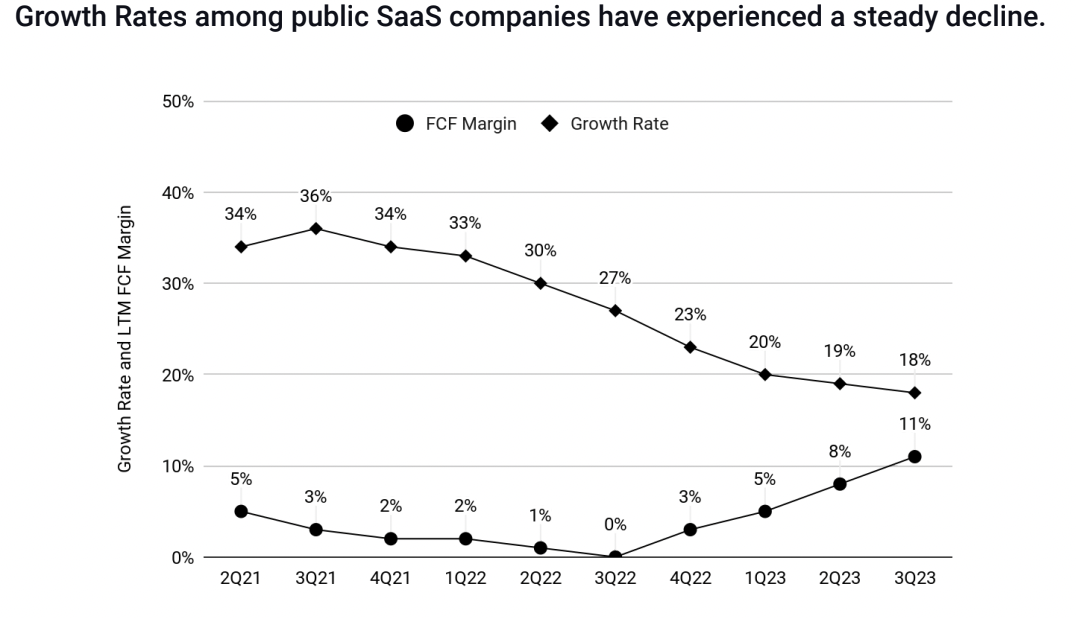
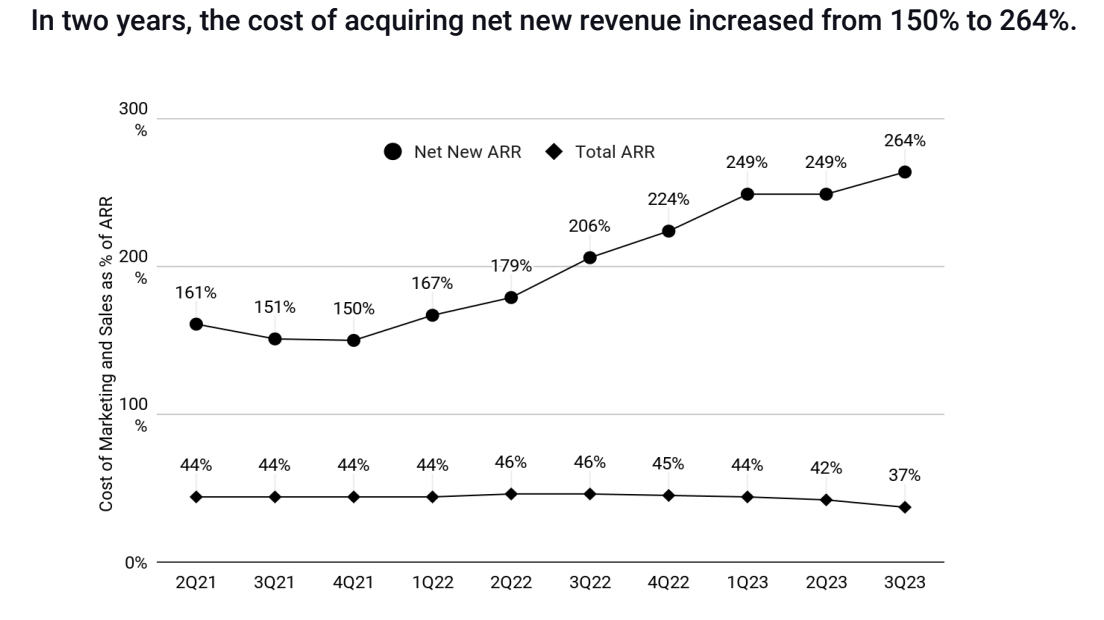
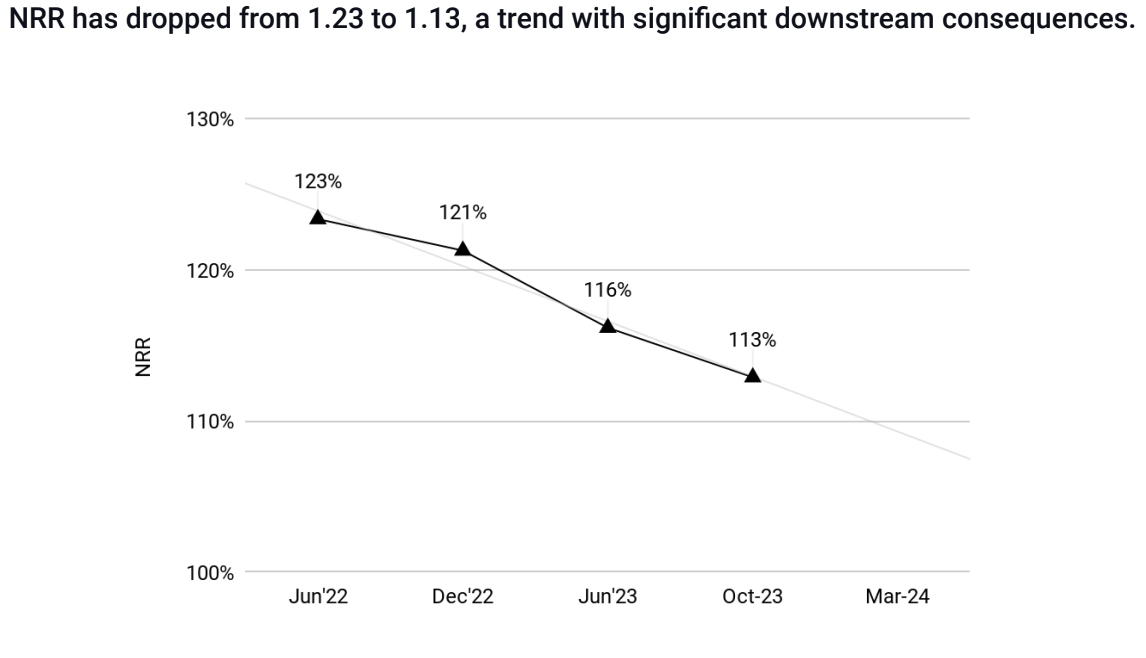
    In the current economic landscape, B2B SaaS companies are navigating through a storm of challenges, including higher Customer Acquisition Costs (CAC), lower Net Revenue Retention (NRR), and other headwinds. These challenges underscore the critical importance of prioritizing customer retention strategies to ensure sustainable growth and profitability. This blog post delves into the value of prioritizing retention in B2B SaaS businesses and outlines effective strategies to enhance retention.

    {Credit for graphs: HAS SAAS LOST GO-TO-MARKET FIT? AND WHAT TO DO ABOUT IT By Jacco van der Kooij and Dave Boyce with data contribution from David Spitz}

    The Value of Prioritizing Retention in B2B SaaS

    1. High Customer Acquisition Costs (CAC): The cost of acquiring new customers in the B2B SaaS sector has been on the rise. Increased competition, sophisticated buyer expectations, and expensive marketing channels contribute to this trend. As acquiring new customers becomes more costly, the value of retaining existing customers escalates. Retention becomes a more cost-effective strategy, as the investment in keeping a customer is generally lower than acquiring a new one.

    2. Lower Net Revenue Retention (NRR): NRR is a critical metric for B2B SaaS businesses, indicating the revenue retained from existing customers over a period, after accounting for churn and downgrades. A lower NRR signals a leaking revenue bucket, where the business is losing existing revenue at a rate that can negate the impact of new acquisitions. Prioritizing retention helps in stabilizing and improving NRR by ensuring that existing customers not only stay but also expand their usage and investment over time.

    3. Economic Headwinds: The current economy presents numerous challenges for B2B SaaS businesses, including budget cuts, longer sales cycles, and increased scrutiny of ROI by customers. In such times, existing customers become a more reliable revenue source compared to the uncertainty associated with new customer acquisition. Retention efforts can thus act as a buffer against economic downturns, providing a steadier revenue stream.

    Strategies to Enhance Retention

    1. Customer Success Programs: Implementing a robust customer success program is pivotal for retention. This involves proactive engagement to ensure customers are realizing the full value of the product. Regular check-ins, training sessions, and providing personalized advice on using the product to achieve business goals can significantly improve customer satisfaction and loyalty.

    2. Personalized Customer Experiences: Personalization is key to retaining customers in the competitive B2B SaaS market. Utilizing data analytics to understand customer usage patterns, preferences, and challenges enables businesses to offer tailored experiences, recommendations, and support. Personalized communication and solutions can make customers feel valued, increasing their likelihood to stay.

    3. Feedback Loops and Continuous Improvement: Establishing channels for regular feedback is crucial for identifying areas of improvement and innovation. Encouraging customers to share their experiences and suggestions, and importantly, acting on this feedback, demonstrates a commitment to meeting their needs. Continuous product improvements and feature updates based on customer feedback can significantly enhance satisfaction and retention.

    4. Transparent Communication: Transparency in communication, especially regarding product updates, pricing changes, and addressing service issues, builds trust with customers. Keeping customers informed and involved fosters a sense of partnership and loyalty, critical components of a strong retention strategy.

    5. Loyalty and Incentive Programs: Developing loyalty programs or offering incentives for renewals and expansions can motivate customers to continue their subscription. These could include discounts, access to exclusive features, or rewards for referrals. Such programs not only improve retention but can also encourage existing customers to contribute to new customer acquisition through referrals.

    6. Reducing Friction in the Customer Journey: Identifying and eliminating points of friction in the customer journey can significantly impact retention. This could involve simplifying the onboarding process, enhancing customer support channels, or making it easier for customers to upgrade or access additional features. A smooth, hassle-free customer experience is a key driver of satisfaction and loyalty.

    7. Investing in Community Building: Creating a community around your product can provide customers with a platform to share ideas, challenges, and successes. Communities can be facilitated through forums, social media groups, or customer events. They not only serve as an additional support channel but also help in building a stronger emotional connection with the brand. Eg – creating a customer ambassador or referral program and turning your happiest customers into ambassadors can help lower costs of acquisition and increase loyalty. Customers who are advocating for your product are less likely to churn. We used PartnerStack to create our ambassador program.

    Conclusion

    In the face of higher CAC, lower NRR, and economic headwinds, prioritizing customer retention has never been more crucial for B2B SaaS businesses. By focusing on strategies that enhance customer satisfaction, loyalty, and value realization, businesses can navigate through challenging times more effectively. Implementing customer success programs, personalizing experiences, fostering continuous improvement, and building a community are just some of the ways B2B SaaS companies can strengthen their retention efforts. In the end, a strong focus on retaining existing customers not only contributes to more stable revenue streams but also lays the foundation for sustainable long-term growth.

  • I'll Show You Mine, If You Show Me Your Attribution Model

    I'll Show You Mine, If You Show Me Your Attribution Model

    Or Why Having The Right Attribution Model Can Be Critical For The Effectiveness Of Your Marketing Spend & The Longevity Of Your Marketing Career

    What is #marketing #attribution?

    Marketing attribution is the model or system by which a business or marketing function is able to measure the impact of their marketing spend, based on different factors such as recency, frequency, time to convert etc.

    To re-use the iconic words of some famous person – if we know that half our marketing spend is being wasted, #attribution modelling empowers you to know which half. However, it’s imperative that you test and fine-tune your model – and compare results from multiple models over a time frame before you throw your hat on one.

    Why is marketing attribution important?

    Marketing attribution models generate a ton of valuable insights that you can put to use for better results or greater efficiency. You may already know that attribution provides a complete view of the entire purchasing process from beginning to end, telling you what marketing channels are most influential in delivering conversions or sales. You’re able to assess the success of your marketing efforts and understand how each touchpoint and therefore each dollar spent contributes to revenue earned from conversions or sales on your website or in your retail office.

    Attribution modelling helps marketers to track the effectiveness of campaigns, even drilling down to the ROI of the keywords in their AdWords campaigns – which is kind of basic stuff, but extend that to every click, every impression and therefore every dollar – and that’s what you get from a good attribution model. Knowing what’s working and what’s not is key to allocating the budget for paid media efforts smartly, leveraging various outbound marketing options more aggressively, and prioritizing content projects correctly.

    Choosing an attribution model

    Of course, your success with attribution will depend on your choice of attribution model. There are six #attribution models and the opportunity for you to create a custom model that reflects your customer behaviour and industry best. The right marketing attribution model for your product will come down to whether you provide a service or product (transactional), whether the product requires a lengthy research and consideration period – or is it a more impulsive purchase.

    If you are a B2B or B2C service with a lengthy sales cycle (Enterprise Saas, Real Estate/Buyer’s Agents, Marketing Automation Software)? A time decay model may appropriate.

    By definition, a time decay model assigns more value to the interaction that directly led to conversion; it also credits previous touchpoints, but to a lesser extent than the touchpoint closest in time to the conversion/sale. The default half-life of a time decay model is 7 ½ days, implying that a touchpoint happening seven days prior to the conversion will receive ½ the credit of a touchpoint occurring on the day of the conversion.

    For lengthy sales cycles where prospects spend considerable time going through your company’s whitepapers, fact sheets and thought-leadership content, a 30-day half-life and 90-day look back (default is 30 days) are recommended. For a shorter sales cycle in the service industry, a time decay model with a 15-day half-life and 30-day look back works nicely.

    If you operate an e-commerce store/online store, consider position-based attribution.

    A position-based attribution model assigns 40% of the credit to the first and last interaction each, and distributes 20% to the interactions happening in the middle, is the way to go. Sell products under $100? A look-back period of 15 days may suffice (average is 30 days). Do your products come with big price tags? Best to work with a look-back of a window of 45 days.

    What are the key things to remember when building, choosing or applying an attribution model for your marketing spend?

    1. Please be aware that all attribution models rely on tracking – and perfect tracking of every impression or every click doesn’t exist. Although #Bizible, #Google Attribution 360, #VisualIQ make a good pass at it.
    2. You’re likely to overestimate the impact of the last touch and underestimate the impact of the first impression – irrespective of the model you apply. You can call this the ‘prodigal click’ problem.
    3. Well behaved early Brand Spend which creates affinity, presence in the consideration set, positive brand associations will be underestimated in terms of impact because
    4. The prodigal last click or first click will get most of the credit for turning a click into a sale
    5. Plan your marketing spend based on the knowledge that your tracking is likely to be imperfect, and your attribution model is a guess – and allow yourself to test and learn as all the best marketers do.
    6. Educate your boss/CEO, your financial leader or CFO on the importance of an #integrated #marketing campaign to drive results – starting with awareness, brand all the way down to last click and purchase. So you don’t get an email one day asking you to reduce your budgets and remove all the spend before the last click. Happens more often than you might expect.

    In an age of multi-channel customer experiences, attribution modelling is a necessary tool in every accomplished marketer’s kit. By applying the right attribution model, you can improve, test and innovate with your marketing efforts to drive better business outcomes.