Blog

  • Strategies to maximise retention in B2B Saas

    Strategies to maximise retention in B2B Saas

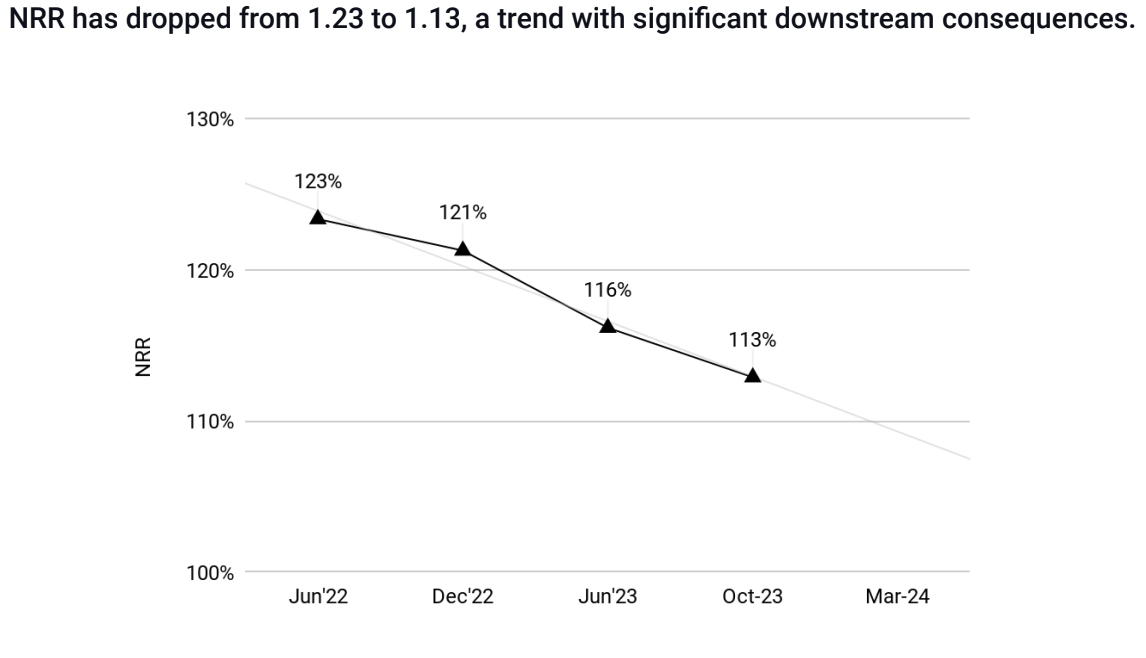
    In the current economic landscape, B2B SaaS companies are navigating through a storm of challenges, including higher Customer Acquisition Costs (CAC), lower Net Revenue Retention (NRR), and other headwinds. These challenges underscore the critical importance of prioritizing customer retention strategies to ensure sustainable growth and profitability. This blog post delves into the value of prioritizing retention in B2B SaaS businesses and outlines effective strategies to enhance retention.
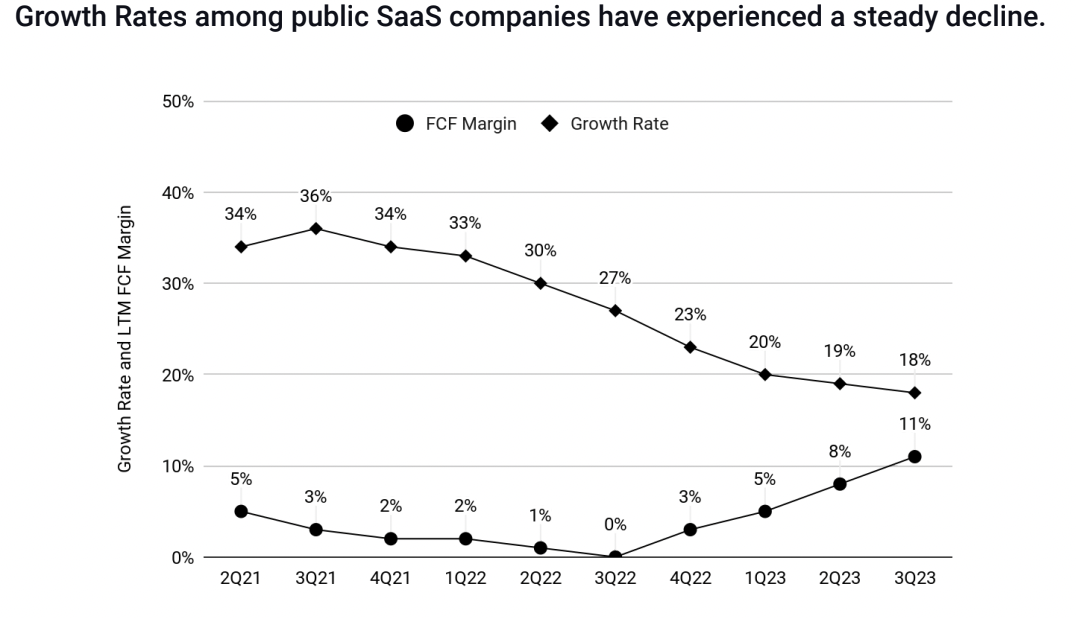
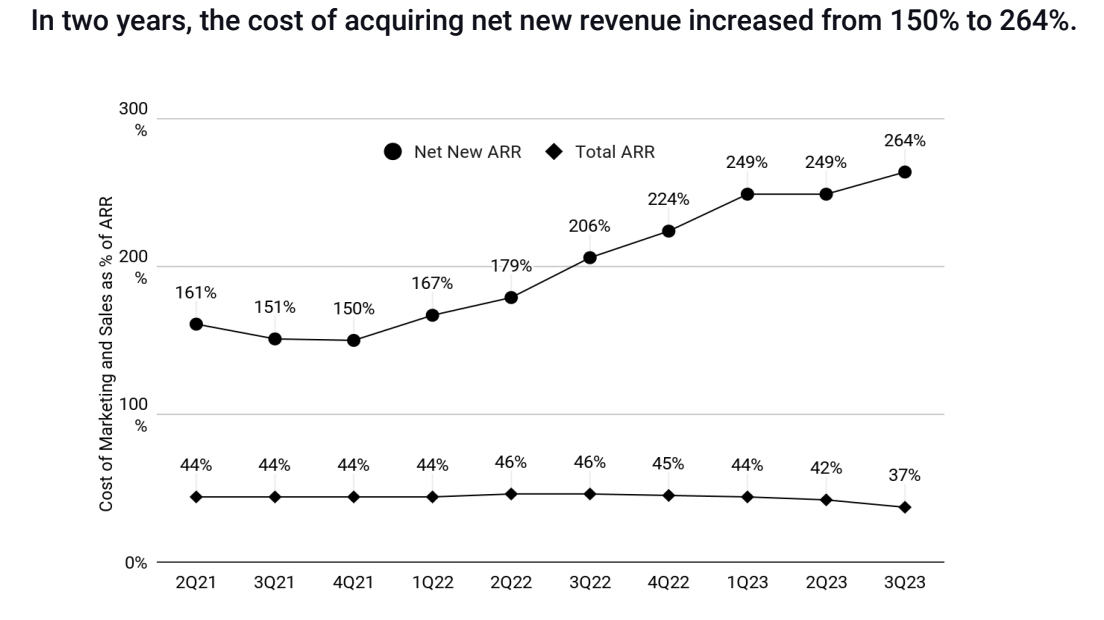
    {Credit for graphs: HAS SAAS LOST GO-TO-MARKET FIT? AND WHAT TO DO ABOUT IT By Jacco van der Kooij and Dave Boyce with data contribution from David Spitz}

    The Value of Prioritizing Retention in B2B SaaS

    1. High Customer Acquisition Costs (CAC): The cost of acquiring new customers in the B2B SaaS sector has been on the rise. Increased competition, sophisticated buyer expectations, and expensive marketing channels contribute to this trend. As acquiring new customers becomes more costly, the value of retaining existing customers escalates. Retention becomes a more cost-effective strategy, as the investment in keeping a customer is generally lower than acquiring a new one.

    2. Lower Net Revenue Retention (NRR): NRR is a critical metric for B2B SaaS businesses, indicating the revenue retained from existing customers over a period, after accounting for churn and downgrades. A lower NRR signals a leaking revenue bucket, where the business is losing existing revenue at a rate that can negate the impact of new acquisitions. Prioritizing retention helps in stabilizing and improving NRR by ensuring that existing customers not only stay but also expand their usage and investment over time.

    3. Economic Headwinds: The current economy presents numerous challenges for B2B SaaS businesses, including budget cuts, longer sales cycles, and increased scrutiny of ROI by customers. In such times, existing customers become a more reliable revenue source compared to the uncertainty associated with new customer acquisition. Retention efforts can thus act as a buffer against economic downturns, providing a steadier revenue stream.

    Strategies to Enhance Retention

    1. Customer Success Programs: Implementing a robust customer success program is pivotal for retention. This involves proactive engagement to ensure customers are realizing the full value of the product. Regular check-ins, training sessions, and providing personalized advice on using the product to achieve business goals can significantly improve customer satisfaction and loyalty.

    2. Personalized Customer Experiences: Personalization is key to retaining customers in the competitive B2B SaaS market. Utilizing data analytics to understand customer usage patterns, preferences, and challenges enables businesses to offer tailored experiences, recommendations, and support. Personalized communication and solutions can make customers feel valued, increasing their likelihood to stay.

    3. Feedback Loops and Continuous Improvement: Establishing channels for regular feedback is crucial for identifying areas of improvement and innovation. Encouraging customers to share their experiences and suggestions, and importantly, acting on this feedback, demonstrates a commitment to meeting their needs. Continuous product improvements and feature updates based on customer feedback can significantly enhance satisfaction and retention.

    4. Transparent Communication: Transparency in communication, especially regarding product updates, pricing changes, and addressing service issues, builds trust with customers. Keeping customers informed and involved fosters a sense of partnership and loyalty, critical components of a strong retention strategy.

    5. Loyalty and Incentive Programs: Developing loyalty programs or offering incentives for renewals and expansions can motivate customers to continue their subscription. These could include discounts, access to exclusive features, or rewards for referrals. Such programs not only improve retention but can also encourage existing customers to contribute to new customer acquisition through referrals.

    6. Reducing Friction in the Customer Journey: Identifying and eliminating points of friction in the customer journey can significantly impact retention. This could involve simplifying the onboarding process, enhancing customer support channels, or making it easier for customers to upgrade or access additional features. A smooth, hassle-free customer experience is a key driver of satisfaction and loyalty.

    7. Investing in Community Building: Creating a community around your product can provide customers with a platform to share ideas, challenges, and successes. Communities can be facilitated through forums, social media groups, or customer events. They not only serve as an additional support channel but also help in building a stronger emotional connection with the brand. Eg – creating a customer ambassador or referral program and turning your happiest customers into ambassadors can help lower costs of acquisition and increase loyalty. Customers who are advocating for your product are less likely to churn. We used PartnerStack to create our ambassador program.

    Conclusion

    In the face of higher CAC, lower NRR, and economic headwinds, prioritizing customer retention has never been more crucial for B2B SaaS businesses. By focusing on strategies that enhance customer satisfaction, loyalty, and value realization, businesses can navigate through challenging times more effectively. Implementing customer success programs, personalizing experiences, fostering continuous improvement, and building a community are just some of the ways B2B SaaS companies can strengthen their retention efforts. In the end, a strong focus on retaining existing customers not only contributes to more stable revenue streams but also lays the foundation for sustainable long-term growth.
  • I'll Show You Mine, If You Show Me Your Attribution Model

    I'll Show You Mine, If You Show Me Your Attribution Model

    Or Why Having The Right Attribution Model Can Be Critical For The Effectiveness Of Your Marketing Spend & The Longevity Of Your Marketing Career

    What is #marketing #attribution?

    Marketing attribution is the model or system by which a business or marketing function is able to measure the impact of their marketing spend, based on different factors such as recency, frequency, time to convert etc.

    To re-use the iconic words of some famous person – if we know that half our marketing spend is being wasted, #attribution modelling empowers you to know which half. However, it’s imperative that you test and fine-tune your model – and compare results from multiple models over a time frame before you throw your hat on one.

    Why is marketing attribution important?

    Marketing attribution models generate a ton of valuable insights that you can put to use for better results or greater efficiency. You may already know that attribution provides a complete view of the entire purchasing process from beginning to end, telling you what marketing channels are most influential in delivering conversions or sales. You’re able to assess the success of your marketing efforts and understand how each touchpoint and therefore each dollar spent contributes to revenue earned from conversions or sales on your website or in your retail office.

    Attribution modelling helps marketers to track the effectiveness of campaigns, even drilling down to the ROI of the keywords in their AdWords campaigns – which is kind of basic stuff, but extend that to every click, every impression and therefore every dollar – and that’s what you get from a good attribution model. Knowing what’s working and what’s not is key to allocating the budget for paid media efforts smartly, leveraging various outbound marketing options more aggressively, and prioritizing content projects correctly.

    Choosing an attribution model

    Of course, your success with attribution will depend on your choice of attribution model. There are six #attribution models and the opportunity for you to create a custom model that reflects your customer behaviour and industry best. The right marketing attribution model for your product will come down to whether you provide a service or product (transactional), whether the product requires a lengthy research and consideration period – or is it a more impulsive purchase.

    If you are a B2B or B2C service with a lengthy sales cycle (Enterprise Saas, Real Estate/Buyer’s Agents, Marketing Automation Software)? A time decay model may appropriate.

    By definition, a time decay model assigns more value to the interaction that directly led to conversion; it also credits previous touchpoints, but to a lesser extent than the touchpoint closest in time to the conversion/sale. The default half-life of a time decay model is 7 ½ days, implying that a touchpoint happening seven days prior to the conversion will receive ½ the credit of a touchpoint occurring on the day of the conversion.

    For lengthy sales cycles where prospects spend considerable time going through your company’s whitepapers, fact sheets and thought-leadership content, a 30-day half-life and 90-day look back (default is 30 days) are recommended. For a shorter sales cycle in the service industry, a time decay model with a 15-day half-life and 30-day look back works nicely.

    If you operate an e-commerce store/online store, consider position-based attribution.

    A position-based attribution model assigns 40% of the credit to the first and last interaction each, and distributes 20% to the interactions happening in the middle, is the way to go. Sell products under $100? A look-back period of 15 days may suffice (average is 30 days). Do your products come with big price tags? Best to work with a look-back of a window of 45 days.

    What are the key things to remember when building, choosing or applying an attribution model for your marketing spend?

    1. Please be aware that all attribution models rely on tracking – and perfect tracking of every impression or every click doesn’t exist. Although #Bizible, #Google Attribution 360, #VisualIQ make a good pass at it.
    2. You’re likely to overestimate the impact of the last touch and underestimate the impact of the first impression – irrespective of the model you apply. You can call this the ‘prodigal click’ problem.
    3. Well behaved early Brand Spend which creates affinity, presence in the consideration set, positive brand associations will be underestimated in terms of impact because
    4. The prodigal last click or first click will get most of the credit for turning a click into a sale
    5. Plan your marketing spend based on the knowledge that your tracking is likely to be imperfect, and your attribution model is a guess – and allow yourself to test and learn as all the best marketers do.
    6. Educate your boss/CEO, your financial leader or CFO on the importance of an #integrated #marketing campaign to drive results – starting with awareness, brand all the way down to last click and purchase. So you don’t get an email one day asking you to reduce your budgets and remove all the spend before the last click. Happens more often than you might expect.

    In an age of multi-channel customer experiences, attribution modelling is a necessary tool in every accomplished marketer’s kit. By applying the right attribution model, you can improve, test and innovate with your marketing efforts to drive better business outcomes.

  • Featured on Channel 7

    Featured on Channel 7

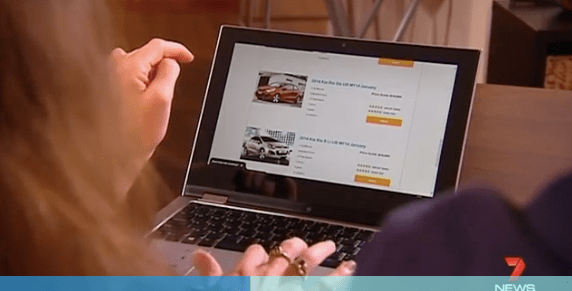
    Autogenie features on Today Tonight, exploring the new car marketplace and with customer interviews

  • SMH on Online Buying

    SMH on Online Buying

    Quoted in the SMH story on buying online

    Autogenie general manager Shiju Thomas says the research shows that a growing number of Australians are happy to buy expensive items such as cars online.

    “The vast majority of Australians are now using the internet to educate themselves about their purchases and our findings come as no surprise, especially in the case of big-ticket items such as cars, where it’s even more important to get the decision right.”

    Read the full story

  • Why learning more may not always be the answer

    Why learning more may not always be the answer

    Learning more and doing more doesn’t always give us the kind of results we want. Often what holds us back is not the lack of knowledge or skill, but the unconscious beliefs we have about ourselves – about who we are, and about what we can do.

    (more…)