Category: Uncategorized

  • AML/CTF Tranche 2: The Buyer’s Agent Compliance Guide

    AML/CTF Tranche 2: The Buyer’s Agent Compliance Guide

    From 1 July 2026, every buyer’s agent in Australia must comply with anti-money laundering laws or face fines up to $33 million per breach. Here is what you need to do, in what order, and by when.

    Australia was one of the last FATF-member nations to bring real estate professionals under anti-money laundering regulation. Haiti and Madagascar were the others. That changed in December 2024 when the Anti-Money Laundering and Counter-Terrorism Financing Amendment Act 2024 received Royal Assent. The law extends AUSTRAC oversight to buyer’s agents, selling agents, property developers, lawyers, accountants, and dealers in precious metals.

    The enforcement date is 1 July 2026. Enrolment opened on 31 March.

    If you are a buyer’s agent and you have not started preparing, you are already behind schedule.

    Why real estate, and why now

    The Australian Federal Police reported that real estate accounted for 65% of total assets confiscated through money laundering operations in 2023. Property has been the preferred vehicle for cleaning illicit funds precisely because the sector operated without AML oversight. While banks, casinos, and remittance providers have reported to AUSTRAC since 2006, anyone could buy a house through an agent with no identity verification, no beneficial ownership checks, and no suspicious activity reporting.

    The reforms close that gap. They bring Australia in line with the UK (regulated since 2007), Canada (2008), and New Zealand (2019).

    What counts as a designated service

    AUSTRAC defines a “broker” as a person who acts as an intermediary or agent for another person for consideration. If you find, identify, negotiate, or help purchase property on behalf of a buyer, you are providing a designated service.

    The trigger point for buyer’s agents is the moment the buyer’s agency agreement is signed. Not when a property is identified. Not at contract exchange. The moment you agree to act for a client, your AML/CTF obligations begin.

    A few activities sit outside the scope: property management, rent collection, residential tenancy, leases under 30 years, and general market advice given before a client decides to buy. But once you start looking for specific properties, you are in.

    There is no transaction value threshold. A buyer’s agent helping someone purchase a $370,000 apartment in Brisbane has the same obligations as one brokering a $35 million mansion in Mosman.

    The seven obligations

    Every buyer’s agency must meet seven core requirements from 1 July 2026.

    Enrol with AUSTRAC. You must register your business, providing details of your structure, services, key personnel, and contact information. The deadline is 29 July 2026 (28 days after commencement). Operating without enrolment is a criminal offence.

    Build an AML/CTF program. This is a documented set of policies covering your money laundering and terrorism financing risk assessment, customer due diligence procedures, suspicious matter reporting processes, employee screening and training, and independent review mechanisms. AUSTRAC has published a free Real Estate Program Starter Kit for agencies with 15 or fewer staff that only broker property transactions. Use it.

    Conduct customer due diligence. Before you provide services to a client, you must verify their identity, determine whether they act on behalf of another person, identify beneficial owners (critical for companies, trusts, and SMSFs), screen for Politically Exposed Persons, and check the DFAT sanctions list. For the counterparty (the seller), you can use delayed CDD provisions and complete verification within 15 days of contract exchange or before settlement, whichever comes first.

    Report suspicious matters. If you suspect a client is not who they claim to be, or you hold information relevant to criminal activity, you must lodge a Suspicious Matter Report with AUSTRAC. The tipping-off prohibition makes it a criminal offence (up to 2 years imprisonment) to tell the client a report has been made.

    Report threshold transactions. Any transaction involving physical currency of $10,000 or more must be reported within 10 business days. Uncommon in property, but the obligation stands.

    Maintain records for seven years. CDD documentation, transaction records, reports, program materials, training logs, and risk assessments.

    Submit annual compliance reports to AUSTRAC and arrange independent evaluation of your program.

    Buyer’s agents face specific complexity

    Investor-focused buyer’s agencies like The Investors Agency deal with a disproportionate share of complex entity structures. This matters because CDD requirements scale with entity complexity.

    For company purchases, you must identify every beneficial owner holding 25% or more. For trust purchases (family trusts, unit trusts, discretionary trusts), you need to verify all trustees, beneficiaries or classes of beneficiaries, settlors, and any appointor or guardian. For SMSF purchases, you verify all members and trustees plus the fund’s registration. Foreign buyers or buyers with international connections trigger enhanced due diligence, including source of funds and source of wealth inquiries.

    A practical mechanism exists to avoid duplication. CDD arrangements allow you to rely on due diligence conducted by another reporting entity (such as the seller’s agent or a conveyancer), provided the arrangement is formally approved by your governing body. This saves time but does not remove your responsibility.

    If a client refuses to provide required identification, you cannot legally act for them. The refusal itself may trigger a suspicious matter reporting obligation.

    Red flags buyer’s agents should watch for

    AUSTRAC has published specific indicators of suspicious activity for the real estate sector. For buyer’s agents, the most relevant include clients purchasing property inconsistent with their stated income, funds arriving from multiple unrelated accounts or offshore entities, clients with no clear legitimate reason for the transaction, large deposit overpayments with requests to refund to a different party, unexplained third parties involved in the purchase, clients who appear to act under instruction from a controlling third party, and sight-unseen purchases with no inspection or due diligence by the buyer.

    None of these are proof of wrongdoing. All of them warrant closer attention and potential reporting.

    The penalty framework is not theoretical

    Civil penalties reach 100,000 penalty units ($33 million) per breach for companies and 20,000 penalty units ($6.6 million) for individuals. Each failure constitutes a separate breach. Onboarding 50 clients without proper identity verification could represent 50 separate penalty events.

    Criminal penalties include up to 2 years imprisonment for tipping off, up to 5 years for providing false information to AUSTRAC, and up to 25 years for conducting transactions involving proceeds of crime. Failure to enrol attracts daily fines of up to $19,800 for businesses.

    For context, AUSTRAC fined Westpac $1.3 billion in 2020, Commonwealth Bank $700 million in 2018, and Crown Melbourne/Perth $450 million in 2023. Real estate agencies will not face penalties of this magnitude. But the per-breach structure means even a small agency faces serious financial exposure for systemic non-compliance.

    AUSTRAC has stated it expects Tranche 2 entities to be compliant from day one. There is no general grace period.

    One additional note: even small businesses normally exempt from the Privacy Act 1988 (under $3 million annual turnover) must comply with it for all personal information collected for AML/CTF purposes.

    How industry bodies are responding

    The Real Estate Institute of Australia (REIA) has been the most active voice, partnering with RegTech provider First AML, producing compliance fact sheets, and making government submissions that achieved practical wins including delayed buyer CDD provisions and expanded reliance arrangements. REIA President Leanne Pilkington acknowledged the scale of the problem: real estate has been a blind spot for money laundering regulation in Australia for two decades.

    REIV (Victoria) has built a comprehensive support framework including an AML/CTF Summit with AUSTRAC representatives scheduled for 24 April 2026. REINSW (NSW) launched a “Master AUSTRAC Compliance” training program and its proprietary REI Vault compliance platform, live since 31 March.

    REBAA, the primary national body for buyer’s agents, has no visible AML/CTF guidance, submissions, or member communications as of April 2026. This is a significant gap. Buyer’s agents are relying on REIA, state REIs, and AUSTRAC directly for guidance.

    What it costs

    Year 1 total costs for a small-to-medium buyer’s agency (using a hybrid approach of software plus professional review) run approximately $5,000 to $15,000. That covers RegTech software ($60 to $500 per month), initial compliance program development, consultant review, staff training, and time investment.

    Purpose-built platforms for Australian real estate include First AML (REIA/REIV partner), easyAML (free tier available), AMLTranche ($59 to $499/month), AML Assured (handles SMSFs, companies, and trusts), and APLYiD (flat fee per listing). Most offer API integration with existing CRM and property management systems.

    For an agency like The Investors Agency with 16 staff, the investment sits at the higher end of that range but remains modest relative to the penalty exposure.


    The compliance checklist: 12 steps from now to 1 July

    Step 1: Appoint your AML/CTF Compliance Officer (now)

    This can be the principal or business owner in a small agency. The compliance officer is your single point of accountability for the entire program. They must be notified to AUSTRAC by 29 July 2026. Appoint them now so they lead the build.

    Step 2: Complete your ML/TF risk assessment (now)

    Assess your business for money laundering and terrorism financing risk. Consider your client types (investors, first-home buyers, foreign buyers, SMSFs), transaction types (residential, commercial, off-market), geographic exposure (domestic, international), delivery channels (in-person, remote), and product complexity. AUSTRAC’s Real Estate Program Starter Kit includes a risk assessment template.

    Step 3: Select and implement RegTech software (by mid-May)

    Choose a platform that handles electronic identity verification, sanctions and PEP screening, beneficial ownership checks for companies/trusts/SMSFs, risk scoring, record keeping, and audit trails. Test it with sample client profiles before going live. Allow 4 to 6 weeks for selection, procurement, and integration.

    Step 4: Rewrite your client onboarding process (by late May)

    Map your current client journey from first contact to signed buyer’s agency agreement. Insert CDD steps before or at the point of agreement signing. Build separate workflows for individuals, companies, trusts, and SMSFs. Create a client-facing explanation of why you now require identity verification (position it as investor protection, not bureaucracy).

    Step 5: Update your buyer’s agency agreement (by late May)

    Add AML/CTF consent clauses allowing you to collect, verify, and retain identification documents. Include a termination provision for clients who refuse to comply with identification requirements. Have your lawyer review the updated agreement.

    Step 6: Draft your AML/CTF program document (by early June)

    This is the formal, written program that AUSTRAC can request at any time. It must cover your risk assessment, CDD procedures (initial, ongoing, and enhanced), suspicious matter identification and reporting procedures, record-keeping protocols, employee due diligence and training, and independent review schedule. Use the AUSTRAC Starter Kit as your foundation and adapt it to your business.

    Step 7: Train all staff (by mid-June)

    Every team member who interacts with clients or handles transaction information needs training. Cover AML/CTF obligations, your internal CDD procedures, red flags and suspicious matter indicators, the tipping-off prohibition (and what it means in practice), and reporting procedures. Budget 2 to 4 hours per person. Document attendance and content. Schedule annual refresher training.

    Step 8: Build your record-keeping system (by mid-June)

    Establish where and how you will store CDD records, transaction records, suspicious matter reports, training logs, and program documentation for the required seven years. Your RegTech platform handles most of this, but ensure it integrates with your existing CRM and file management.

    Step 9: Establish your suspicious matter reporting process (by mid-June)

    Create an internal escalation pathway: frontline staff identify red flags, escalate to the compliance officer, the compliance officer assesses and lodges reports with AUSTRAC where required. Document the process. Make it clear that the tipping-off prohibition prevents anyone from telling the client a report has been made.

    Step 10: Enrol with AUSTRAC (by 29 July 2026, but do it in June)

    Complete your enrolment through AUSTRAC’s online portal. Provide your business details, services, compliance officer information, and contact details. Do not wait until the deadline. Enrol as soon as your program is ready.

    Step 11: Transition existing clients (from 1 July)

    For clients you were already working with before 1 July, specific transitional CDD arrangements apply. You must complete CDD on existing clients, but the timing is more flexible than for new clients. Plan to work through your existing client book systematically in the first 3 to 6 months after commencement.

    Step 12: Schedule your first independent review (within 12 months)

    Your AML/CTF program must be independently reviewed. For Tranche 2 entities, the initial review deadline is staggered by AUSTRAC account number. Plan for it within 12 months of commencement and budget accordingly.


    Compliance as competitive advantage

    When these obligations take effect, non-compliant agencies cannot legally operate. Compliance becomes a market entry requirement, not a differentiator. But the quality of compliance varies, and that is where the advantage sits.

    Agencies that invest in proper technology and training will offer a materially smoother client experience. Fast digital onboarding versus clunky manual processes. Clear communication about why verification protects the investor. Seamless integration with mortgage brokers, conveyancers, and selling agents who already operate under their own compliance frameworks.

    For selling agents evaluating competing offers, knowing that a buyer’s agent only represents verified, legitimate buyers reduces the risk of a sale collapsing. For referral partners, alignment with a compliant agency streamlines the entire transaction chain.

    Practical steps to market your compliance: add an AML/CTF compliance page to your website, display your AUSTRAC registration badge, frame identity verification in client communications as investment protection, brief referral partners on your new processes, and position early compliance as evidence of professional standards.

    The agencies that build this infrastructure now will hold a genuine edge in a market where trust and verification become the baseline for professional practice.


    Shiju Thomas is a marketing leader with experience scaling buyer’s agency, B2B SaaS, and PropTech businesses across Australia. He built the marketing function at Cohen Handler (Australia’s largest buyer’s agency at the time) and established the Buyer’s agent category by scaling revenue and growth at Cohen Handler, and has held CMO and Head of Marketing roles at ezyCollect, canibuild etc.


  • The Great Graduation Crisis: Why Most SaaS Startups Never Make It to Series A

    The Great Graduation Crisis: Why Most SaaS Startups Never Make It to Series A

    The venture landscape has undergone a profound transformation. What was once a predictable progression from seed to Series A has become a treacherous passage where four out of five startups perish. This isn’t merely a market correction—it’s a fundamental recalibration of what it means to build enduring value in the digital age.

    The Arithmetic of Ambition

    The numbers tell a stark story. In the halcyon days of 2020, nearly a quarter of U.S. seed-funded startups reached Series A within two years. By 2022, that figure had collapsed to a mere 5%. For SaaS startups specifically, the chasm has grown even wider: only 12% of those who raised seed in 2022 managed to secure Series A by mid-2024, compared to 37% from the 2020 cohort.

    This isn’t simply about market cycles. It represents a philosophical shift in how investors perceive value creation. The era of “growth at any cost” has yielded to an age where efficiency and sustainability reign supreme.

    Regional Realities: A Tale of Three Ecosystems

    United States: The Epicenter of Excellence American startups historically enjoyed the highest graduation rates, with 51-61% of pre-2021 seed companies eventually reaching Series A or beyond. Today’s founders face a dramatically different reality, where only one-third of seed companies progress further.

    India: The Crucible of Constraint The Indian ecosystem presents perhaps the greatest challenge, with conversion rates hovering around 20%—cited as “the lowest among all ecosystems.” This stark reality reflects both the intensity of competition and the scarcity of Series A capital willing to back emerging markets.

    Australia & New Zealand: The Boutique Battlefield ANZ mirrors global trends with conversion rates around 15-25%, constrained by a smaller pool of investors and the geographic isolation that requires exceptional companies to attract international capital.

    Time: The Ultimate Truth Teller

    The temporal dimension reveals another crucial truth: excellence cannot be rushed. The median time from seed to Series A has stretched from 20 months in 2021 to nearly 24 months today. Many companies now require 24-30 months to demonstrate the traction that investors demand.

    This extension isn’t merely about market conditions—it reflects a deeper understanding that sustainable businesses require time to mature. Bridge rounds and extended seed funding have become structural features rather than emergency measures, with nearly half of all Series A financings in 2023 being extensions rather than new rounds.

    The Economics of Expectation

    Round Sizes: Bigger Bets, Higher Bars

    U.S. Series A rounds have evolved from the $5-8 million norm of a decade ago to today’s $10-15 million standard. The 2021 peak saw median rounds of $12 million, dropping to $9-10 million in 2023 before rebounding in 2024 as AI-driven optimism returned.

    Indian startups reached a milestone in 2021 when average Series A deals first hit $10 million, maintaining around $11 million through 2022. ANZ rounds remain more modest, typically ranging from $5-8 million USD, reflecting the regional capital constraints.

    Valuations: The Price of Progress

    Pre-money valuations tell a story of boom, correction, and cautious recovery:

    • U.S.: From pre-pandemic medians of $25 million to 2022 peaks of $50+ million, settling around $38-44 million today
    • India: Rising from $15-25 million historically to $30-40 million for quality startups
    • ANZ: More conservative $15-30 million range, unless attracting international investors

    The New Imperatives: Four Pillars of Series A Success

    The elevated bar demands a fundamental shift in how founders approach growth:

    1. Runway Resilience

    Plan for 24-30 months of capital between seed and Series A. The days of 18-month sprints are over.

    2. Metric Mastery

    Investors now expect $1-2 million ARR, 80%+ gross margins, and burn multiples under 2x. Quality of growth trumps velocity.

    3. Geographic Agility

    Strong SaaS startups increasingly transcend regional boundaries. Indian companies leverage global revenue streams; ANZ startups court international investors.

    4. Efficiency Excellence

    The Rule of 40 isn’t just a benchmark—it’s becoming table stakes for serious consideration.

    The Philosophical Foundation

    At its core, this transformation reflects a return to fundamental principles. The market has rediscovered that sustainable value creation requires discipline, patience, and genuine customer value. The companies that survive this crucible won’t just be stronger—they’ll be fundamentally different beasts, built for endurance rather than mere velocity.

    The “Series A crunch” isn’t a temporary inconvenience—it’s a permanent elevation of standards. For founders willing to embrace this reality, it represents not an obstacle but an opportunity to build companies of lasting significance.

    The great graduation crisis, paradoxically, may prove to be venture capitalism’s greatest gift: a forced return to the timeless principles of building businesses that matter.


    Sources and References


    1. Crunchbase News: U.S. seed-stage outcomes and graduation rates: news.crunchbase.com
    2. LinkedIn Analysis: Series A conversion trends and timing: linkedin.com
    3. Carta Research: Fundraising timelines and valuation datacarta.com
    4. Allegory Capital: Early-stage market commentary: allegory.capital
    5. Bain & Company: India VC trends and deal sizes: bain.com
    6. ITIC IITH: Indian startup ecosystem analysis:itic.iith.ac.in
    7. ScaleUp Finance: SaaS-specific funding research:scaleup.finance
    8. Aurelia Ventures: Series A valuation benchmarks aureliaventures.com
    9. Morgan Stanley: India tech startup valuations: morganstanley.com
    20. Cutthrough Venture: Australian funding trends: cutthrough.com
  • Applying AI & ML to your B2B Saas Marketing

    Applying AI & ML to your B2B Saas Marketing

    In today’s rapidly evolving B2B SaaS landscape, Artificial Intelligence (AI) and Machine Learning (ML) technologies stand out as pivotal forces driving acquisition strategies to unprecedented levels of sophistication and effectiveness. The utilization of AI and ML is current reality, with these technologies already making significant impacts across various stages of the customer acquisition funnel. From automating lead generation processes to enabling hyper-personalized marketing campaigns, AI and ML are reshaping the way B2B SaaS companies engage with potential customers.

    Understanding Customer Behavior Through Data

    AI and ML shine in their ability to analyze vast amounts of data to understand customer behavior and preferences deeply. This capability allows for the identification of patterns that might not be apparent to human analysts, leading to more accurate predictions of future behaviors. For example, predictive analytics can forecast which leads are most likely to convert, enabling sales teams to prioritize their efforts more effectively.

    Optimizing Marketing Campaigns

    One of the most significant advantages of AI and ML in B2B SaaS acquisition is the optimization of marketing campaigns. These technologies can analyze the performance of various campaign elements in real-time, making adjustments to improve effectiveness. By testing different messages, channels, and content types, AI-driven platforms can quickly identify the most impactful strategies, reducing the cost of customer acquisition and increasing ROI.

    Personalizing the Customer Experience

    Personalization is a critical component of successful B2B SaaS marketing, and AI and ML technologies take this to the next level. By leveraging data on customer interactions, preferences, and behavior, AI can tailor the marketing content and sales pitches to each prospect. This level of personalization ensures that potential customers receive relevant information that addresses their specific needs and pain points, significantly increasing the likelihood of conversion.

    Lead Scoring and Qualification

    AI and ML also transform lead scoring and qualification processes by providing more nuanced and dynamic evaluations of potential customers. Instead of relying on static criteria, these technologies can continuously learn from new data, refining their predictions about which leads are most valuable. This ensures that sales teams focus their energy on the leads most likely to close, optimizing the sales process.

    Enhancing Customer Retention

    Beyond acquisition, AI and ML play vital roles in customer retention. By analyzing usage data and customer feedback, these technologies can identify early signs of dissatisfaction or churn risk. This allows companies to proactively address issues, improving customer satisfaction and loyalty.

    Case Studies of AI and ML in Action

    Several B2B SaaS companies have already successfully implemented AI and ML into their acquisition strategies. Salesforce, with its Einstein AI, provides users with predictive insights to better understand customer needs and forecast sales trends. Another example is HubSpot, which utilizes ML to enhance its CRM capabilities, offering more personalized and efficient marketing automation tools.

    Similarly, marketing automation platforms like Marketo leverage AI for more accurate lead scoring, ensuring that marketing and sales efforts are concentrated on the prospects with the highest conversion potential. These practical applications demonstrate the tangible benefits of integrating AI and ML into B2B SaaS acquisition strategies.

    Future Directions

    As AI and ML technologies continue to evolve, we can expect even more innovative applications in the B2B SaaS sector. From advanced chatbots that provide instant customer support to AI-driven content creation tools that generate highly engaging materials, the possibilities are nearly limitless. The future of B2B SaaS acquisition lies in harnessing these technologies to create more efficient, personalized, and effective marketing and sales processes.

    In conclusion, the integration of AI and ML into B2B SaaS acquisition strategies represents a significant leap forward in how companies engage with potential customers. By leveraging the power of data and automation, businesses can optimize their marketing efforts, personalize their interactions, and ultimately drive more conversions. As these technologies continue to advance, their role in shaping the future of B2B SaaS marketing will only grow, offering exciting opportunities for innovation and growth.

  • Strategies to maximise retention in B2B Saas

    Strategies to maximise retention in B2B Saas

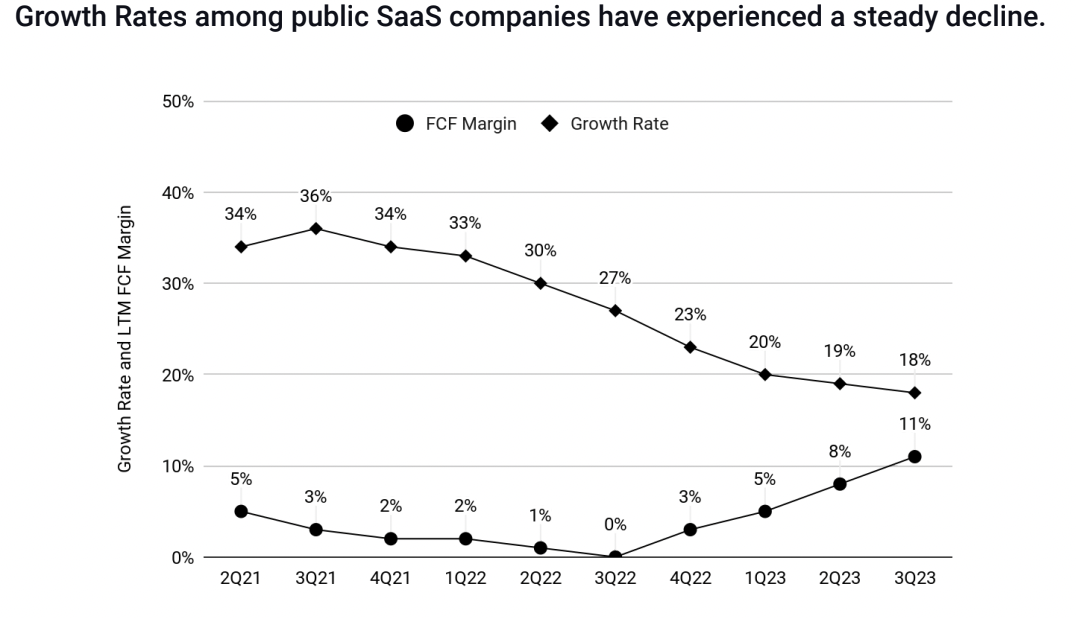
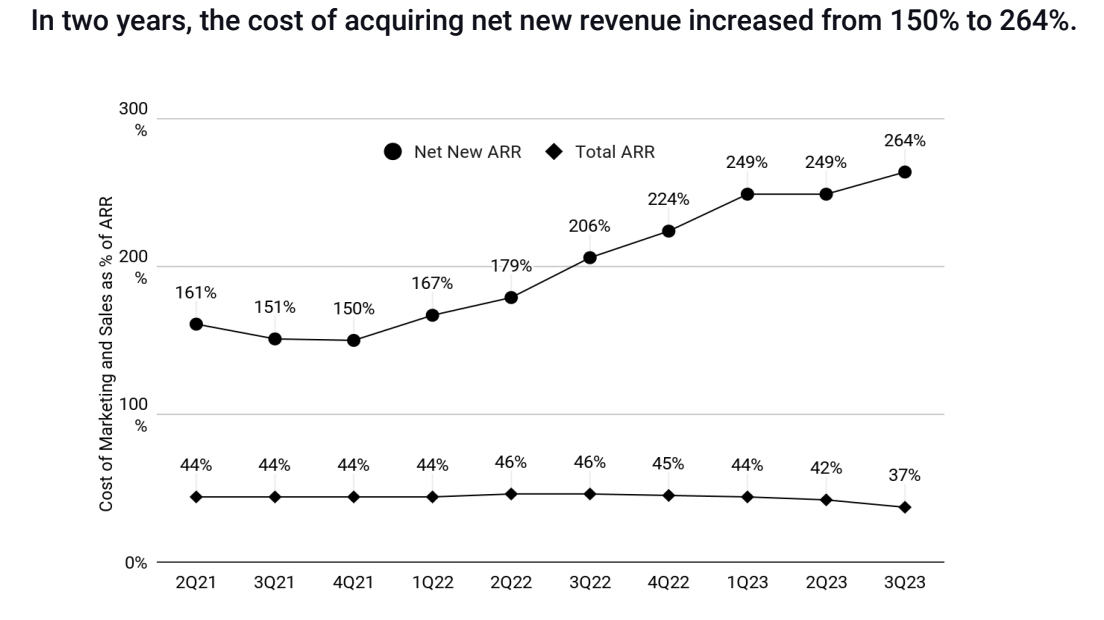
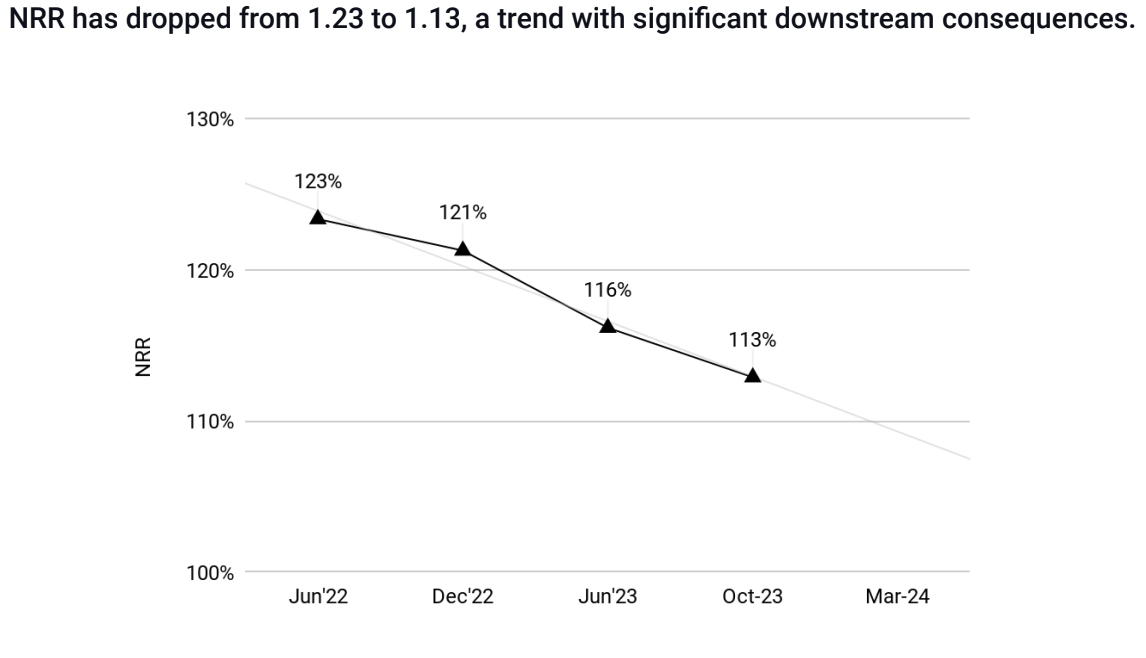
    In the current economic landscape, B2B SaaS companies are navigating through a storm of challenges, including higher Customer Acquisition Costs (CAC), lower Net Revenue Retention (NRR), and other headwinds. These challenges underscore the critical importance of prioritizing customer retention strategies to ensure sustainable growth and profitability. This blog post delves into the value of prioritizing retention in B2B SaaS businesses and outlines effective strategies to enhance retention.

    {Credit for graphs: HAS SAAS LOST GO-TO-MARKET FIT? AND WHAT TO DO ABOUT IT By Jacco van der Kooij and Dave Boyce with data contribution from David Spitz}

    The Value of Prioritizing Retention in B2B SaaS

    1. High Customer Acquisition Costs (CAC): The cost of acquiring new customers in the B2B SaaS sector has been on the rise. Increased competition, sophisticated buyer expectations, and expensive marketing channels contribute to this trend. As acquiring new customers becomes more costly, the value of retaining existing customers escalates. Retention becomes a more cost-effective strategy, as the investment in keeping a customer is generally lower than acquiring a new one.

    2. Lower Net Revenue Retention (NRR): NRR is a critical metric for B2B SaaS businesses, indicating the revenue retained from existing customers over a period, after accounting for churn and downgrades. A lower NRR signals a leaking revenue bucket, where the business is losing existing revenue at a rate that can negate the impact of new acquisitions. Prioritizing retention helps in stabilizing and improving NRR by ensuring that existing customers not only stay but also expand their usage and investment over time.

    3. Economic Headwinds: The current economy presents numerous challenges for B2B SaaS businesses, including budget cuts, longer sales cycles, and increased scrutiny of ROI by customers. In such times, existing customers become a more reliable revenue source compared to the uncertainty associated with new customer acquisition. Retention efforts can thus act as a buffer against economic downturns, providing a steadier revenue stream.

    Strategies to Enhance Retention

    1. Customer Success Programs: Implementing a robust customer success program is pivotal for retention. This involves proactive engagement to ensure customers are realizing the full value of the product. Regular check-ins, training sessions, and providing personalized advice on using the product to achieve business goals can significantly improve customer satisfaction and loyalty.

    2. Personalized Customer Experiences: Personalization is key to retaining customers in the competitive B2B SaaS market. Utilizing data analytics to understand customer usage patterns, preferences, and challenges enables businesses to offer tailored experiences, recommendations, and support. Personalized communication and solutions can make customers feel valued, increasing their likelihood to stay.

    3. Feedback Loops and Continuous Improvement: Establishing channels for regular feedback is crucial for identifying areas of improvement and innovation. Encouraging customers to share their experiences and suggestions, and importantly, acting on this feedback, demonstrates a commitment to meeting their needs. Continuous product improvements and feature updates based on customer feedback can significantly enhance satisfaction and retention.

    4. Transparent Communication: Transparency in communication, especially regarding product updates, pricing changes, and addressing service issues, builds trust with customers. Keeping customers informed and involved fosters a sense of partnership and loyalty, critical components of a strong retention strategy.

    5. Loyalty and Incentive Programs: Developing loyalty programs or offering incentives for renewals and expansions can motivate customers to continue their subscription. These could include discounts, access to exclusive features, or rewards for referrals. Such programs not only improve retention but can also encourage existing customers to contribute to new customer acquisition through referrals.

    6. Reducing Friction in the Customer Journey: Identifying and eliminating points of friction in the customer journey can significantly impact retention. This could involve simplifying the onboarding process, enhancing customer support channels, or making it easier for customers to upgrade or access additional features. A smooth, hassle-free customer experience is a key driver of satisfaction and loyalty.

    7. Investing in Community Building: Creating a community around your product can provide customers with a platform to share ideas, challenges, and successes. Communities can be facilitated through forums, social media groups, or customer events. They not only serve as an additional support channel but also help in building a stronger emotional connection with the brand. Eg – creating a customer ambassador or referral program and turning your happiest customers into ambassadors can help lower costs of acquisition and increase loyalty. Customers who are advocating for your product are less likely to churn. We used PartnerStack to create our ambassador program.

    Conclusion

    In the face of higher CAC, lower NRR, and economic headwinds, prioritizing customer retention has never been more crucial for B2B SaaS businesses. By focusing on strategies that enhance customer satisfaction, loyalty, and value realization, businesses can navigate through challenging times more effectively. Implementing customer success programs, personalizing experiences, fostering continuous improvement, and building a community are just some of the ways B2B SaaS companies can strengthen their retention efforts. In the end, a strong focus on retaining existing customers not only contributes to more stable revenue streams but also lays the foundation for sustainable long-term growth.

  • I'll Show You Mine, If You Show Me Your Attribution Model

    I'll Show You Mine, If You Show Me Your Attribution Model

    Or Why Having The Right Attribution Model Can Be Critical For The Effectiveness Of Your Marketing Spend & The Longevity Of Your Marketing Career

    What is #marketing #attribution?

    Marketing attribution is the model or system by which a business or marketing function is able to measure the impact of their marketing spend, based on different factors such as recency, frequency, time to convert etc.

    To re-use the iconic words of some famous person – if we know that half our marketing spend is being wasted, #attribution modelling empowers you to know which half. However, it’s imperative that you test and fine-tune your model – and compare results from multiple models over a time frame before you throw your hat on one.

    Why is marketing attribution important?

    Marketing attribution models generate a ton of valuable insights that you can put to use for better results or greater efficiency. You may already know that attribution provides a complete view of the entire purchasing process from beginning to end, telling you what marketing channels are most influential in delivering conversions or sales. You’re able to assess the success of your marketing efforts and understand how each touchpoint and therefore each dollar spent contributes to revenue earned from conversions or sales on your website or in your retail office.

    Attribution modelling helps marketers to track the effectiveness of campaigns, even drilling down to the ROI of the keywords in their AdWords campaigns – which is kind of basic stuff, but extend that to every click, every impression and therefore every dollar – and that’s what you get from a good attribution model. Knowing what’s working and what’s not is key to allocating the budget for paid media efforts smartly, leveraging various outbound marketing options more aggressively, and prioritizing content projects correctly.

    Choosing an attribution model

    Of course, your success with attribution will depend on your choice of attribution model. There are six #attribution models and the opportunity for you to create a custom model that reflects your customer behaviour and industry best. The right marketing attribution model for your product will come down to whether you provide a service or product (transactional), whether the product requires a lengthy research and consideration period – or is it a more impulsive purchase.

    If you are a B2B or B2C service with a lengthy sales cycle (Enterprise Saas, Real Estate/Buyer’s Agents, Marketing Automation Software)? A time decay model may appropriate.

    By definition, a time decay model assigns more value to the interaction that directly led to conversion; it also credits previous touchpoints, but to a lesser extent than the touchpoint closest in time to the conversion/sale. The default half-life of a time decay model is 7 ½ days, implying that a touchpoint happening seven days prior to the conversion will receive ½ the credit of a touchpoint occurring on the day of the conversion.

    For lengthy sales cycles where prospects spend considerable time going through your company’s whitepapers, fact sheets and thought-leadership content, a 30-day half-life and 90-day look back (default is 30 days) are recommended. For a shorter sales cycle in the service industry, a time decay model with a 15-day half-life and 30-day look back works nicely.

    If you operate an e-commerce store/online store, consider position-based attribution.

    A position-based attribution model assigns 40% of the credit to the first and last interaction each, and distributes 20% to the interactions happening in the middle, is the way to go. Sell products under $100? A look-back period of 15 days may suffice (average is 30 days). Do your products come with big price tags? Best to work with a look-back of a window of 45 days.

    What are the key things to remember when building, choosing or applying an attribution model for your marketing spend?

    1. Please be aware that all attribution models rely on tracking – and perfect tracking of every impression or every click doesn’t exist. Although #Bizible, #Google Attribution 360, #VisualIQ make a good pass at it.
    2. You’re likely to overestimate the impact of the last touch and underestimate the impact of the first impression – irrespective of the model you apply. You can call this the ‘prodigal click’ problem.
    3. Well behaved early Brand Spend which creates affinity, presence in the consideration set, positive brand associations will be underestimated in terms of impact because
    4. The prodigal last click or first click will get most of the credit for turning a click into a sale
    5. Plan your marketing spend based on the knowledge that your tracking is likely to be imperfect, and your attribution model is a guess – and allow yourself to test and learn as all the best marketers do.
    6. Educate your boss/CEO, your financial leader or CFO on the importance of an #integrated #marketing campaign to drive results – starting with awareness, brand all the way down to last click and purchase. So you don’t get an email one day asking you to reduce your budgets and remove all the spend before the last click. Happens more often than you might expect.

    In an age of multi-channel customer experiences, attribution modelling is a necessary tool in every accomplished marketer’s kit. By applying the right attribution model, you can improve, test and innovate with your marketing efforts to drive better business outcomes.